The Rise of Agentic AI: How Autonomous Agents are Redefining Software Engineering
For the past few years, developers have grown accustomed to "Copilot" style AI assistants—tools that autocomplete lines of code, explain functions, or write boilerplate. However, a major paradigm shift is currently unfolding: the rise of Agentic AI.
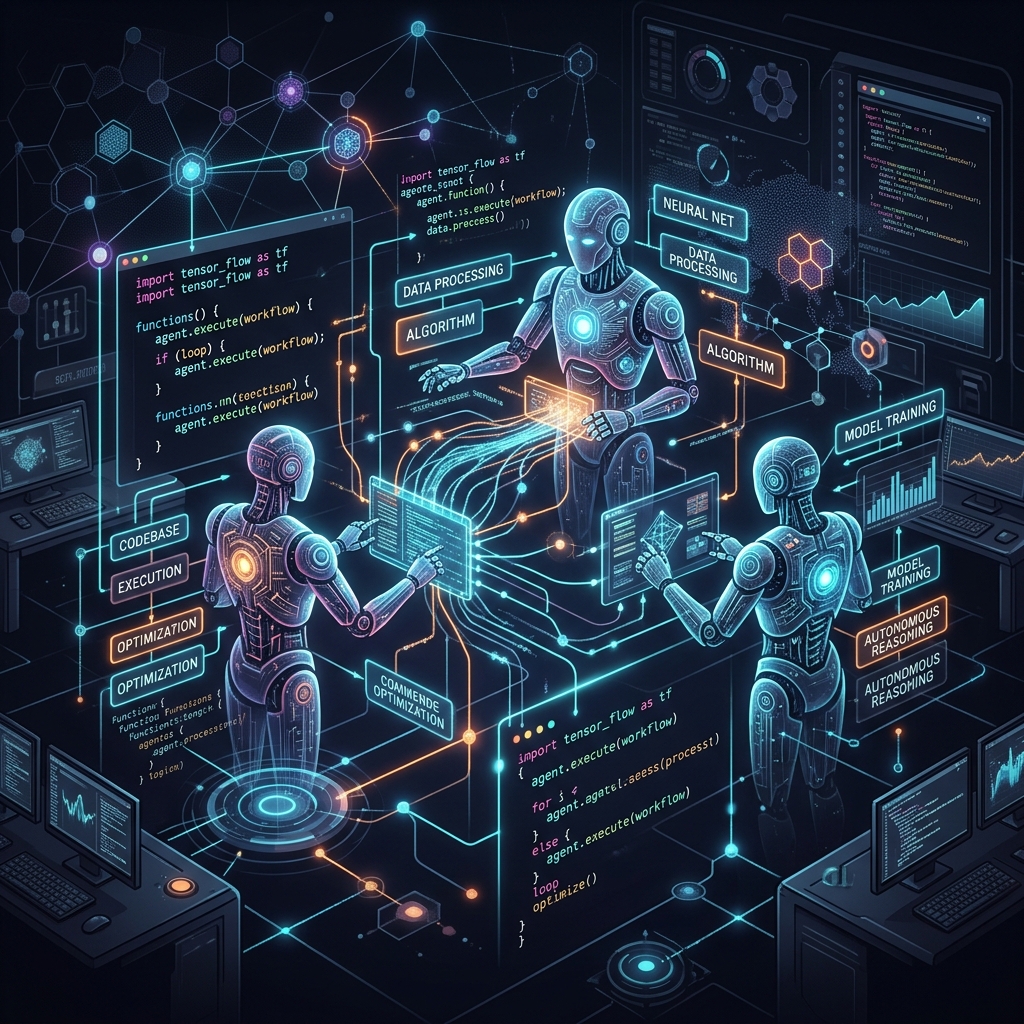
Unlike traditional LLM completions, agentic systems don't just respond to a static prompt. They construct multi-step execution plans, invoke tools (like file system editors, command-line terminals, and web browsers), inspect outputs, and self-correct when things go wrong. They are transitioning from passive assistants to active, goal-driven team members.
What Makes an AI System "Agentic"?
An agentic AI system operates on a loop of perception, planning, and execution. Instead of predicting the next token in one shot, it engages in a continuous cycle of:
- Goal-Driven Planning: Deconstructing a complex user prompt (e.g., "Add user authentication using NextAuth") into a structured sequence of discrete files and actions.
- Tool Utilization: Dynamically interacting with code repositories, installing npm modules, calling API endpoints, or querying Google Search to read documentation.
- State & Environment Feedback: Running test suites, analyzing compiler errors, or looking at logs to see if a script succeeded. If it fails, the agent reads the error stack trace and automatically edits the code to fix the bug.
- Browser Interaction: Opening a browser instance, navigating to the local development port (e.g., localhost:3000), taking screenshots, and verifying that the CSS styles are correctly rendered without layout shifts.
How It Redefines the Developer Workflow
This technology changes the day-to-day work of software developers from writing syntax to orchestration and review.
"Software engineering is shifting from manual coding to supervising reasoning loops. The developer's primary role will be defining requirements, writing robust unit tests, and reviewing the plans proposed by autonomous agents."
With tools like Cursor, Devin, and open-source frameworks like LangGraph and CrewAI, developers can delegate tedious refactoring, API integration, and test coverage generation to autonomous subagents. Developers can focus on high-level system architecture, security compliance, and user experience.
Key Takeaways for Engineers & Tech Leaders
Core Takeaways:
- Invest in Automated Testing: AI agents are only as safe as the test suites validating them. Comprehensive CI/CD and unit testing are crucial to prevent agents from committing bad code.
- Standardize Your Codebase: AI agents perform exponentially better in clean, well-documented codebases with consistent style guides (e.g., ESLint, Prettier, structured component directories).
- Learn Orchestration: Understanding how to chain LLMs, define state maps, and write custom tools (APIs, CLI scripts) will be a critical engineering skill in the coming decade.
Conclusion
Autonomous coding agents are no longer science fiction. They are here and rapidly maturing. Embracing agentic workflows today ensures that software engineers remain highly productive, scaling their capability to build complex, reliable digital products at unprecedented speeds.